

Aerodynamic fins
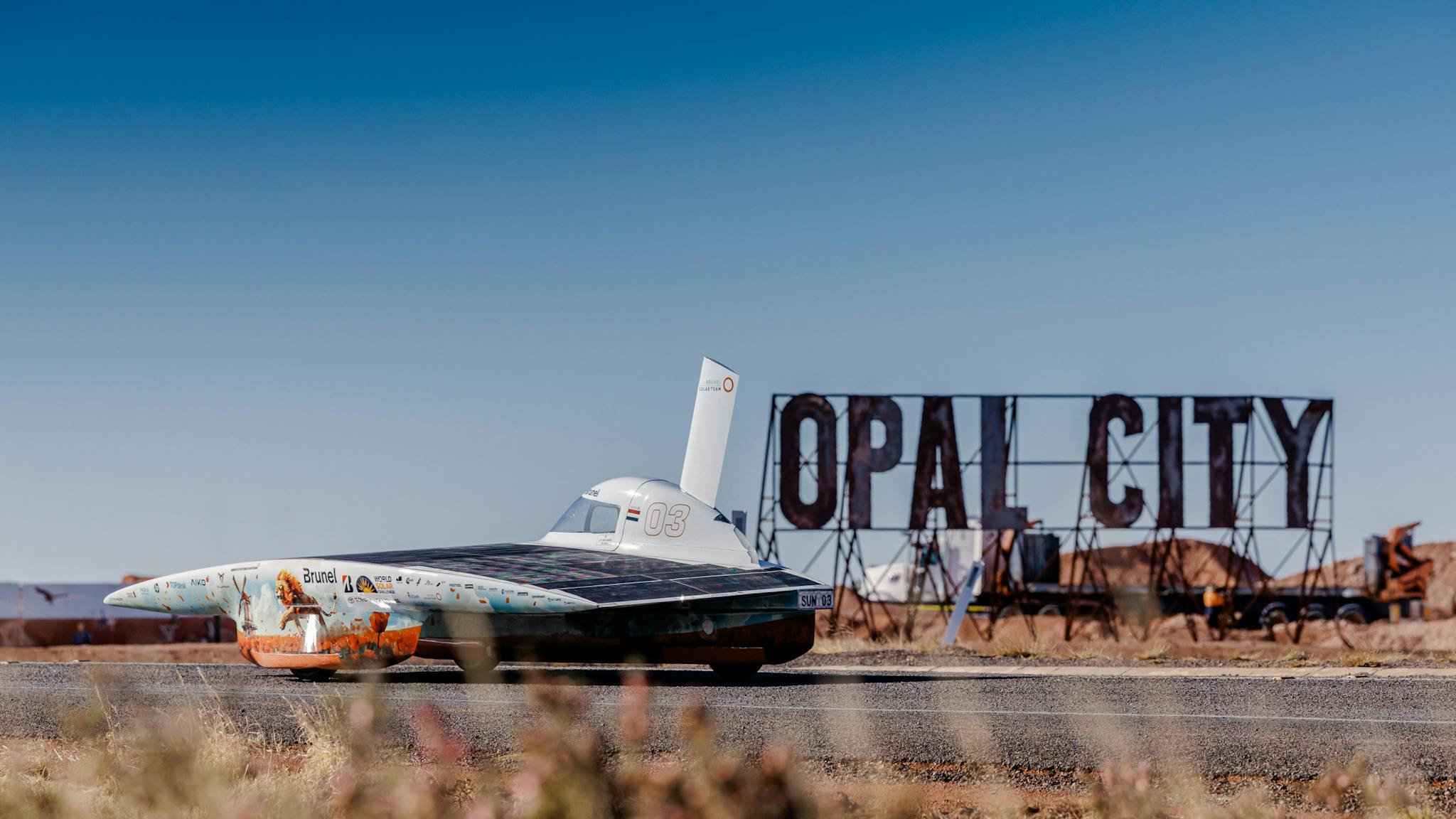
The aerodynamic fins convert side winds into forward thrust, improving both efficiency and stability.
Nuna 13
The BWSC 2025 brought mayor regulation changes: cars could feature 6 m² of solar panels, 1,5x more than previous years. In contrast, the battery would be 1/3 the size. And the most impactful change was that the race would be held for the first time during the Australian winter, bringing less solar energy and more extreme weather conditions.
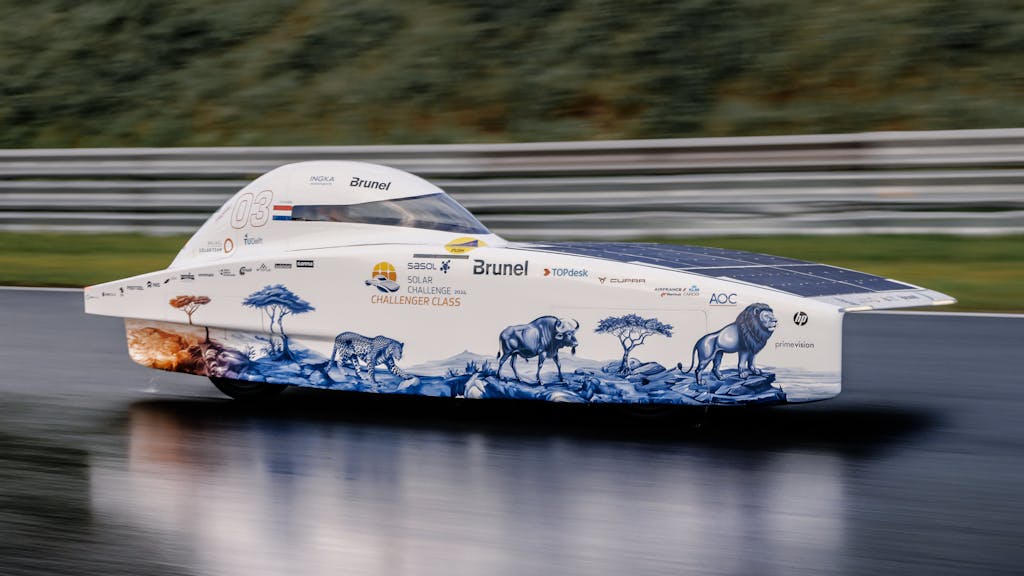
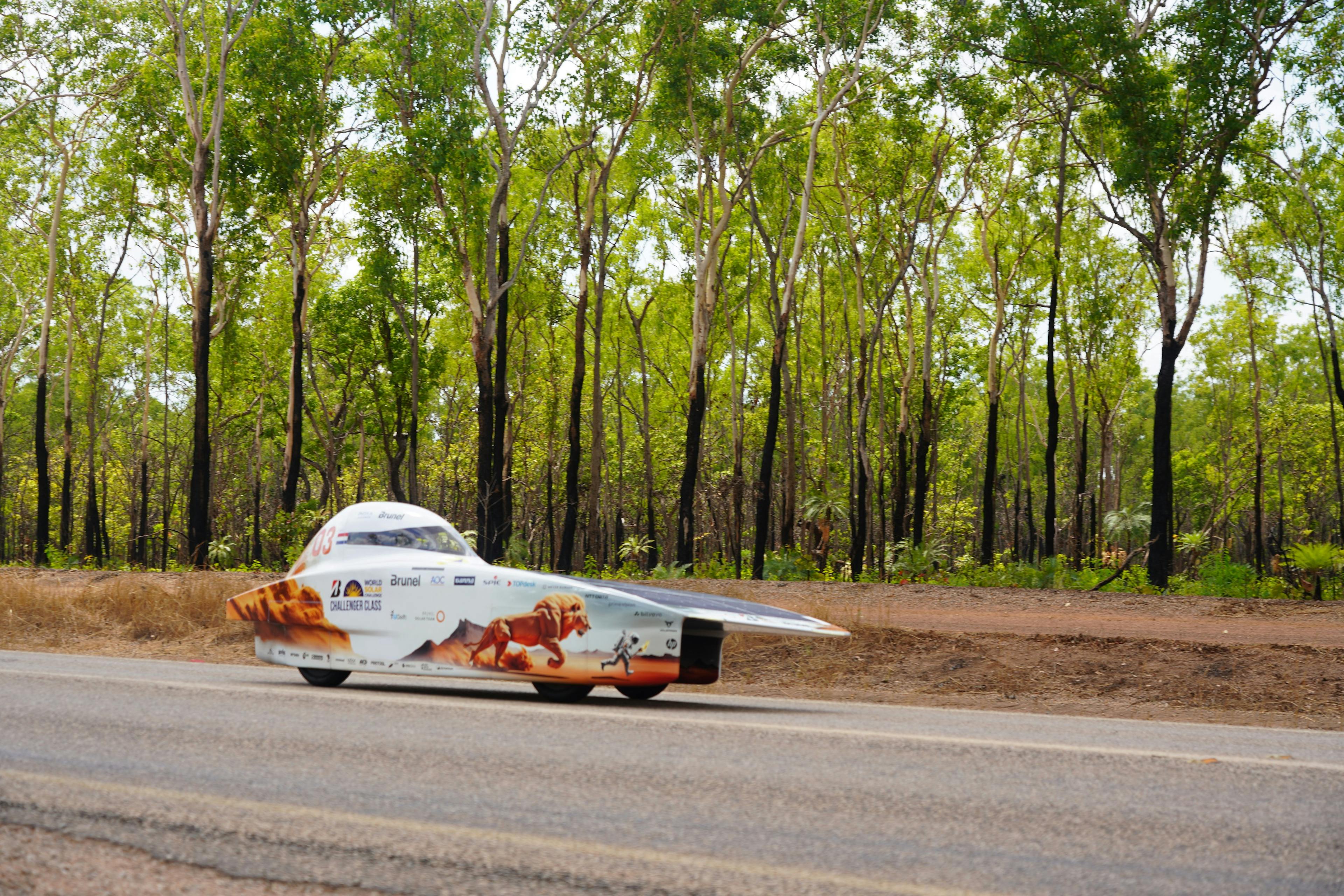
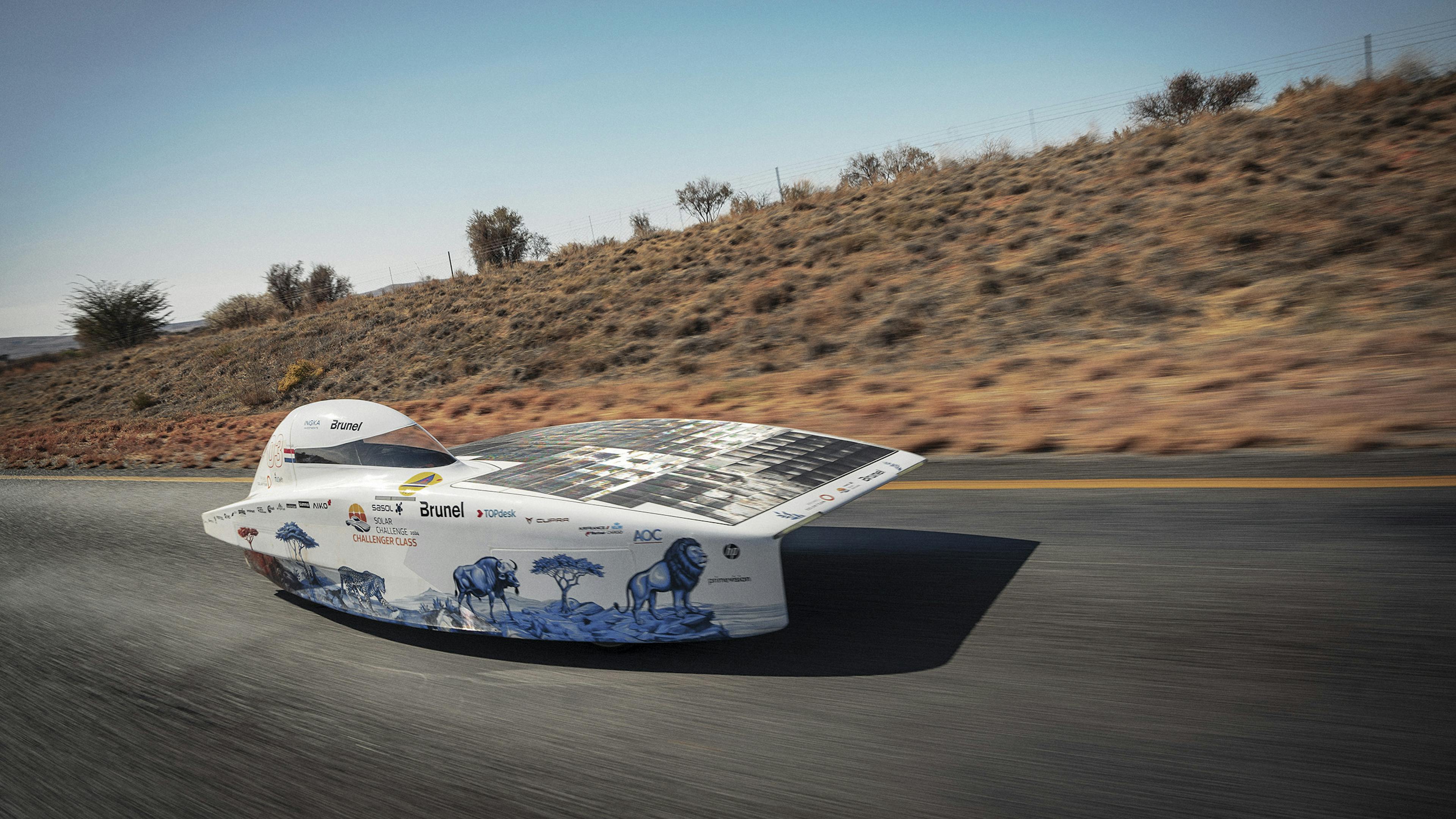
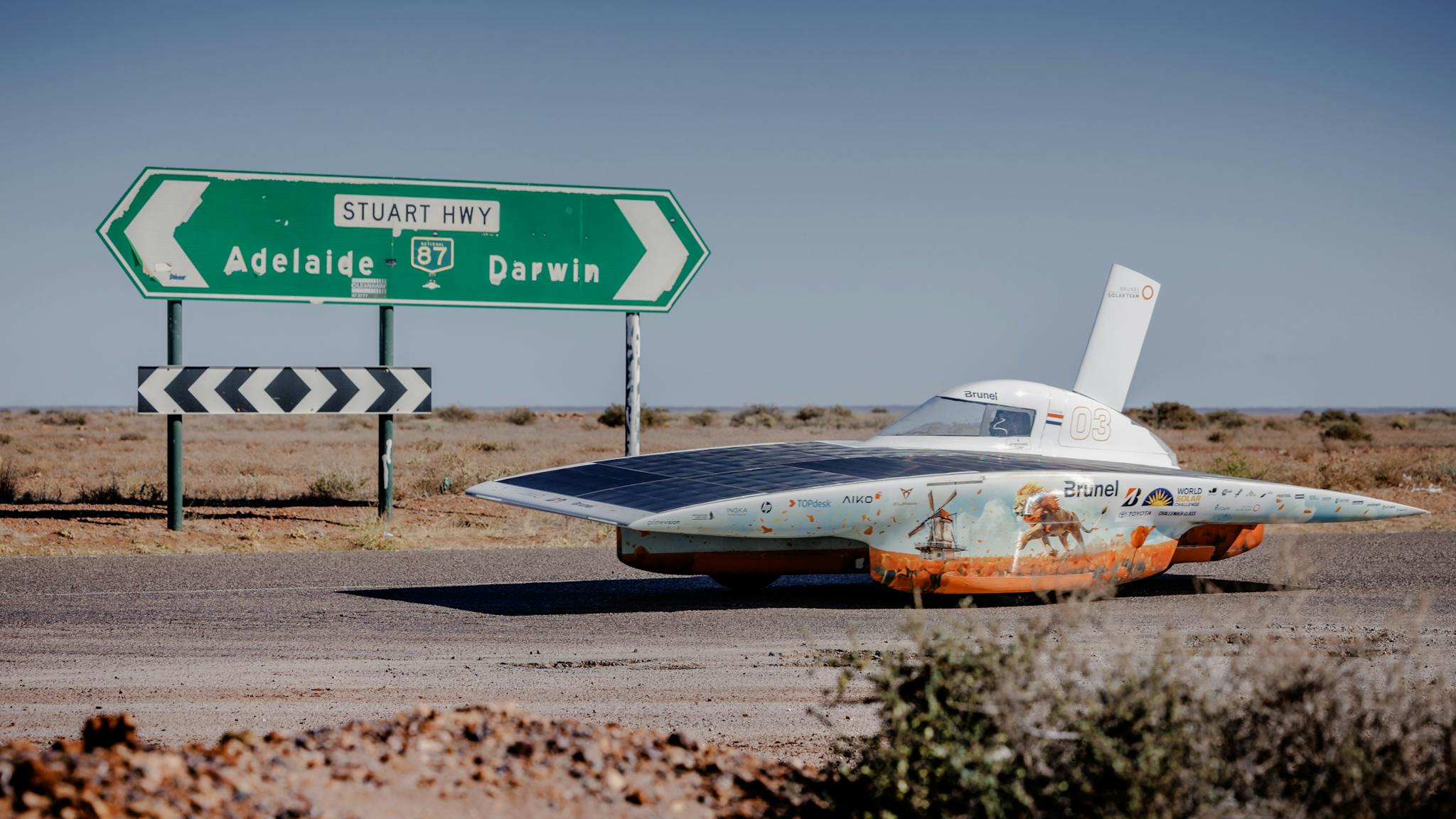
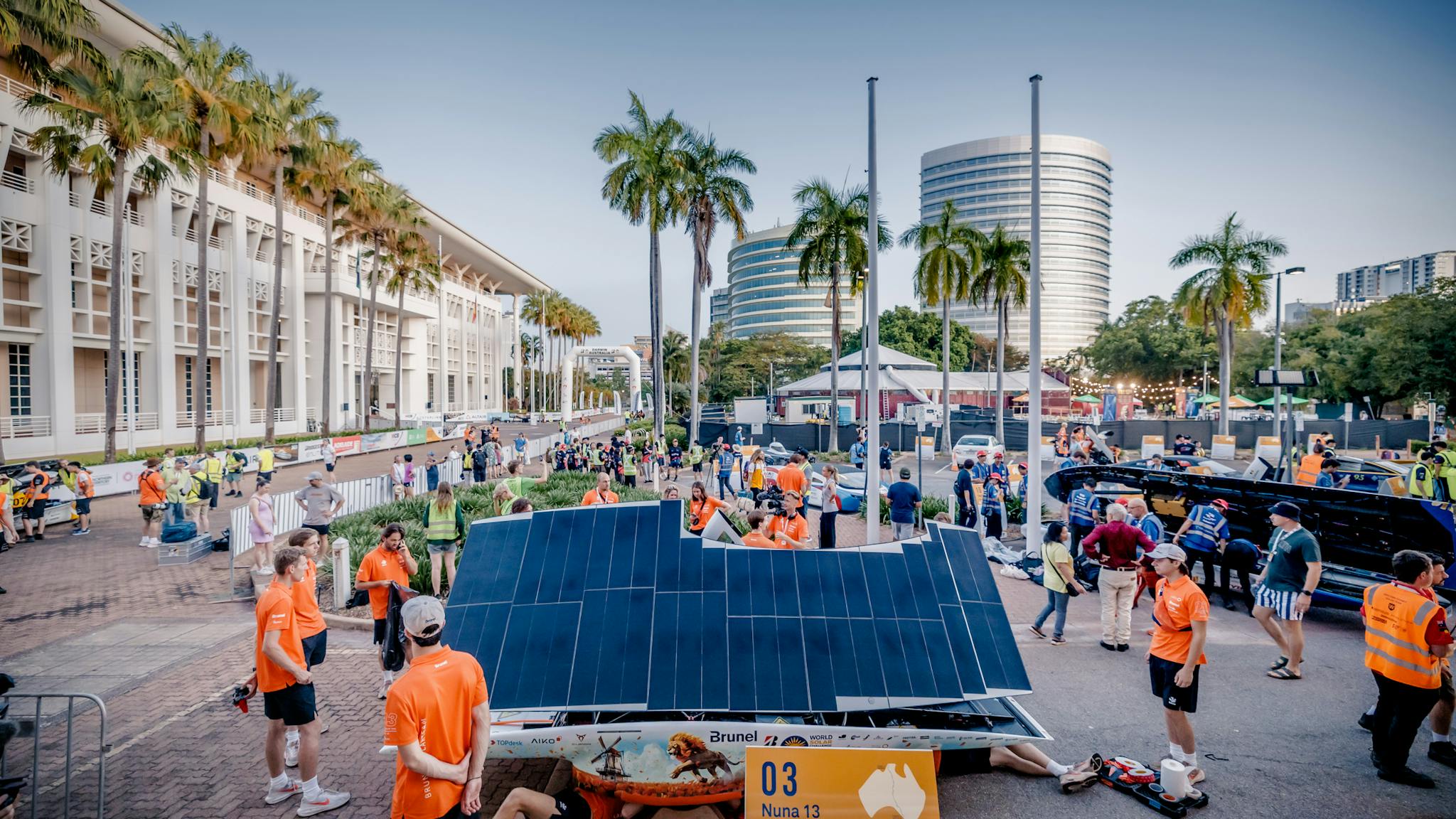
The team answered with Nuna 13, the world's first 6 m² asymmetric catamaran in solar racing designed to harness not only sunlight, but also the wind. Its two extendable and rotatable aerodynamic fins and optimised body allow the car to convert side winds into forward thrust, improving both efficiency and stability.
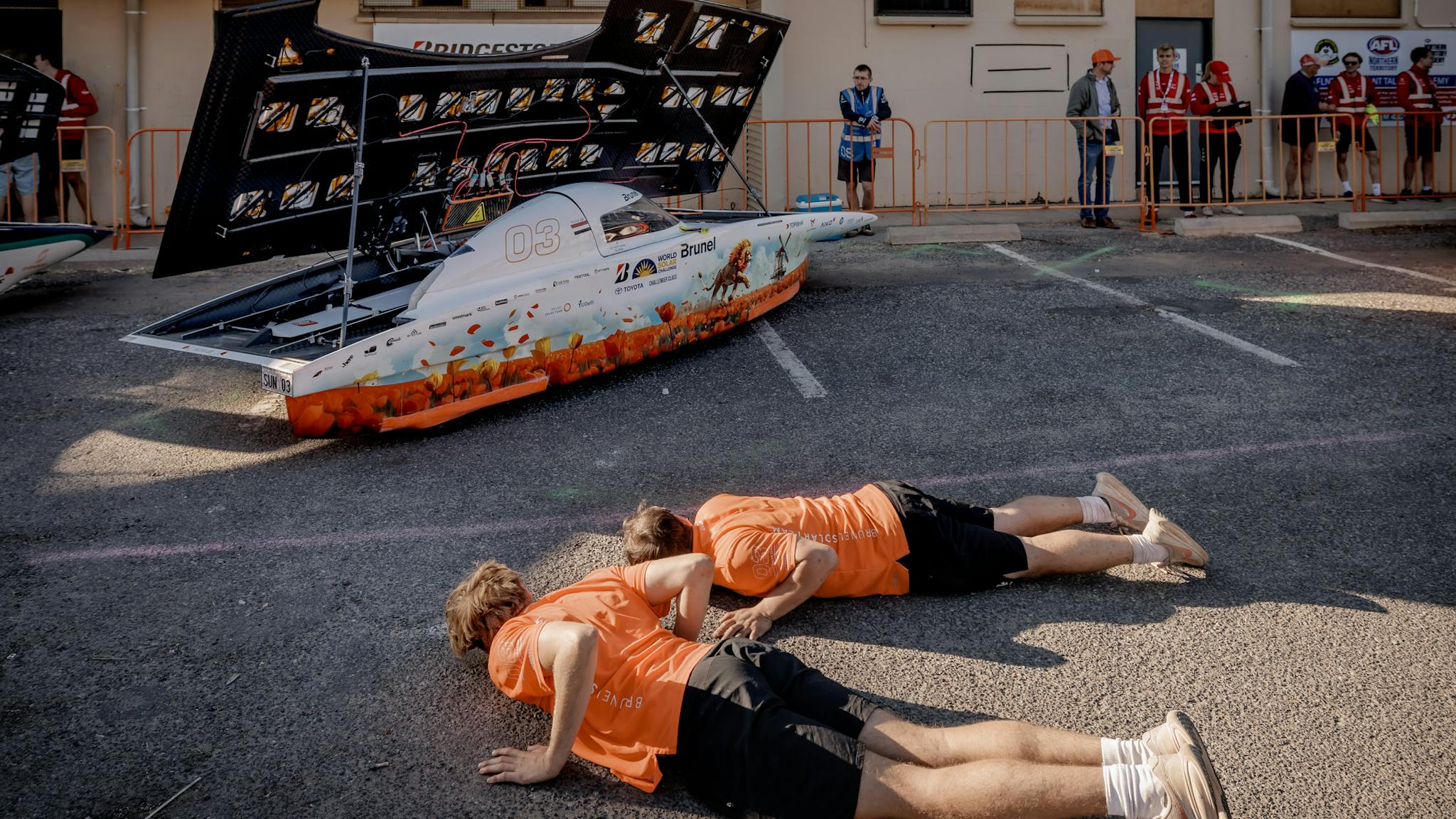
The car features a completely new drivetrain, including custom-designed ironless electric motor, advanced steering system, and inhouse-build battery pack. Nuna 13 is also the team's first solar car built with pre-preg carbon fibres, resulting in a strong lightweight structure.
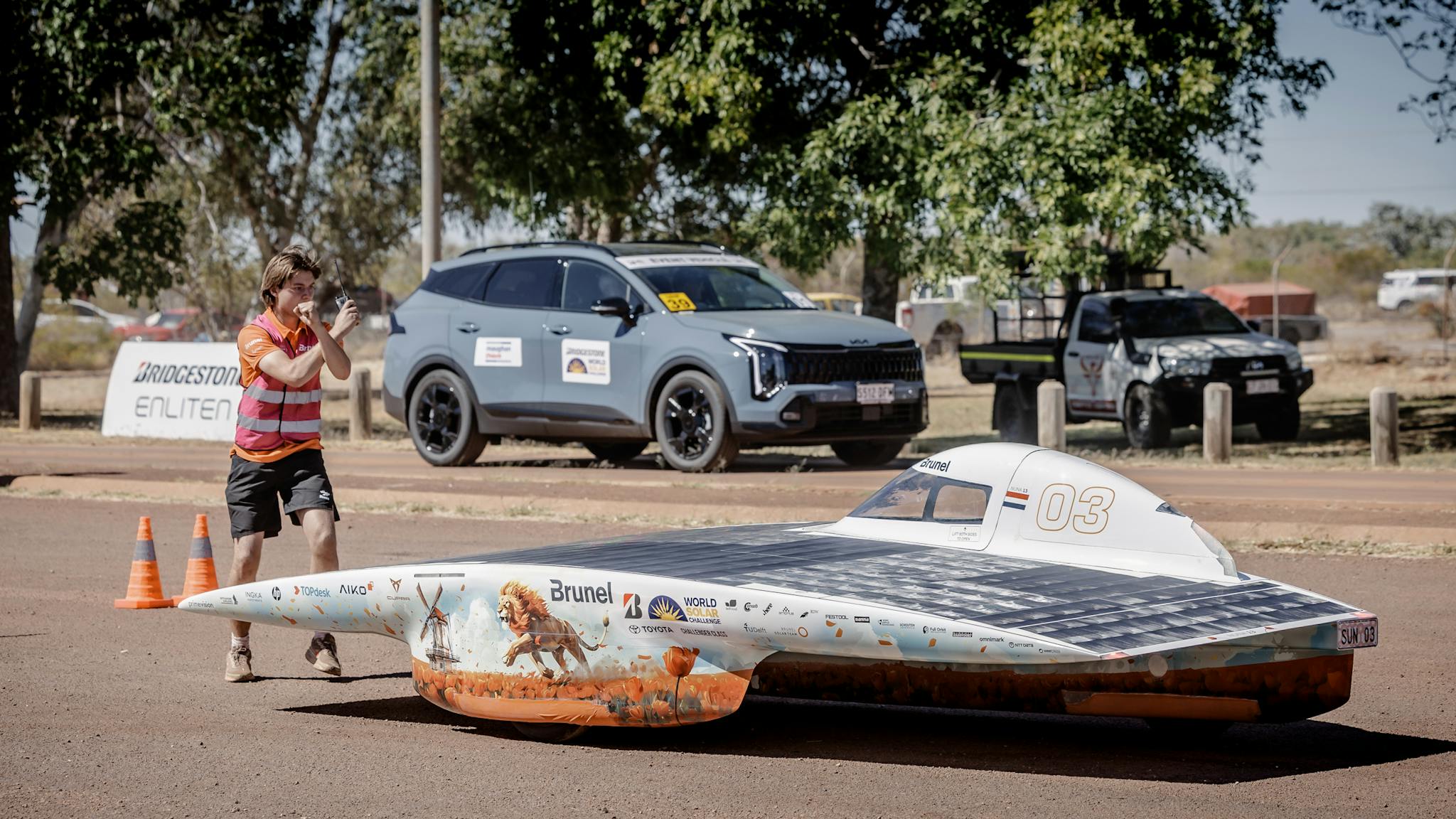
The design is a driving symbol of the Netherlands, featuring the Dutch lion, windmills, and orange tulips, all in the style of famous Dutch painters. Seven golden tulips represent the previous world titles.
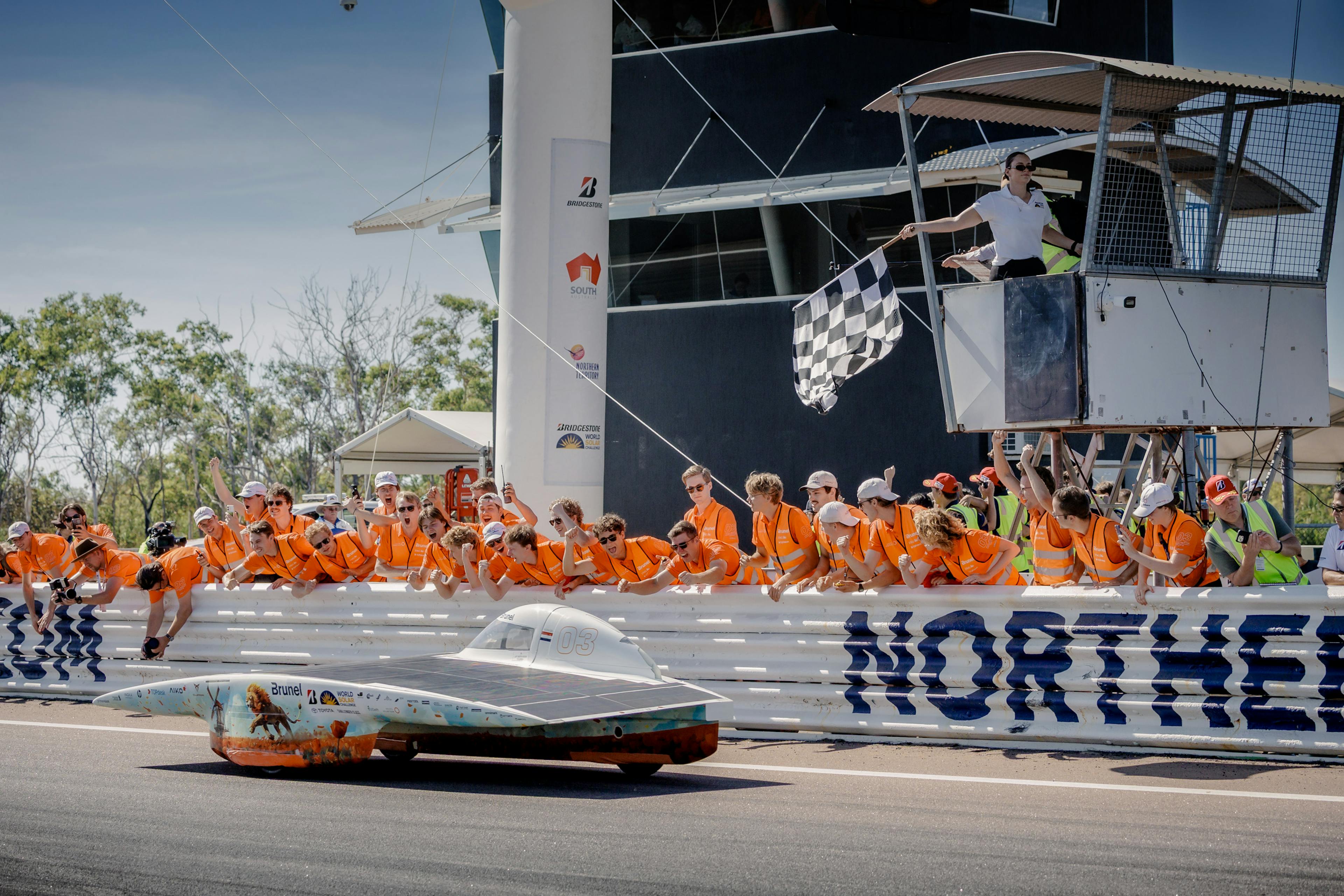
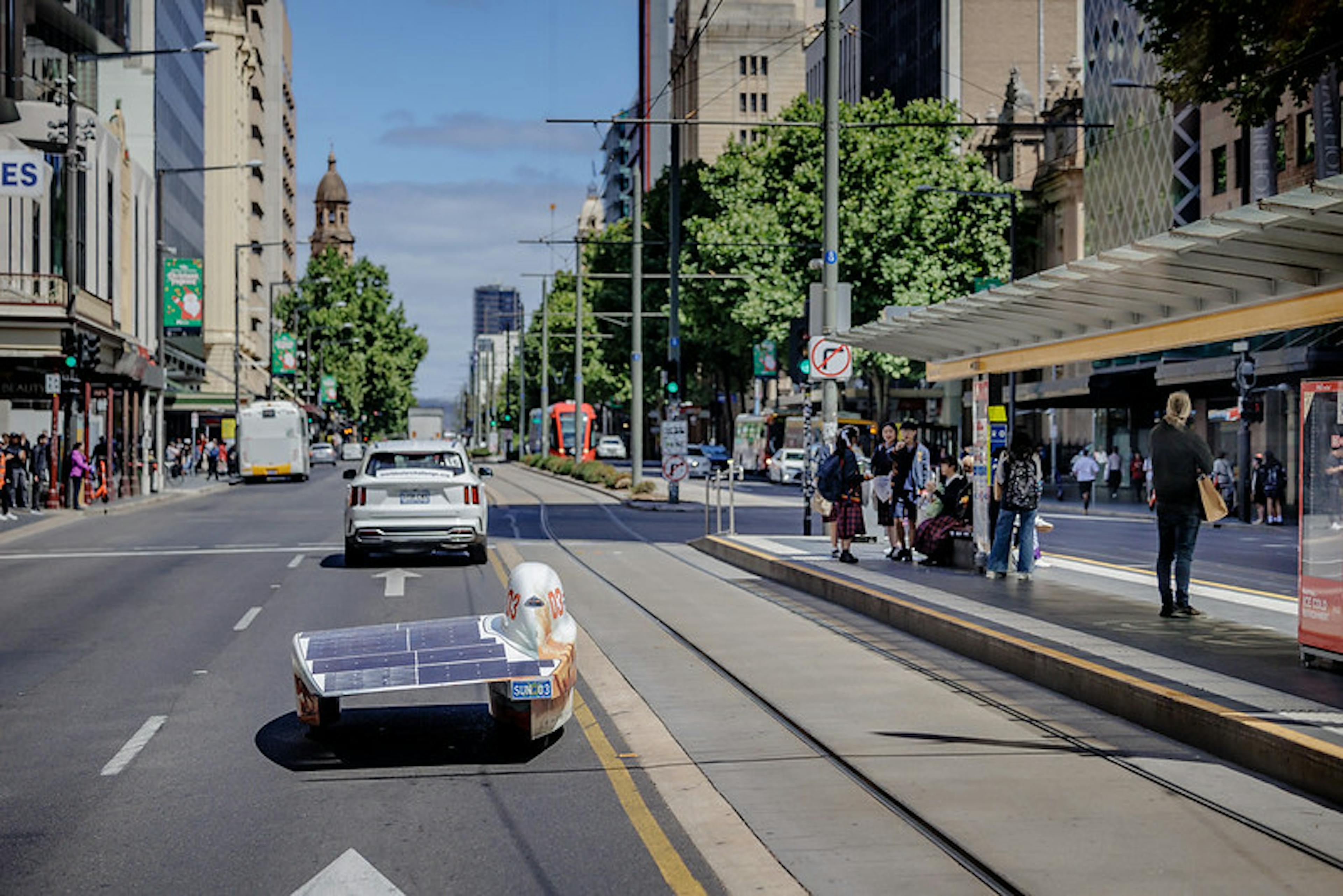
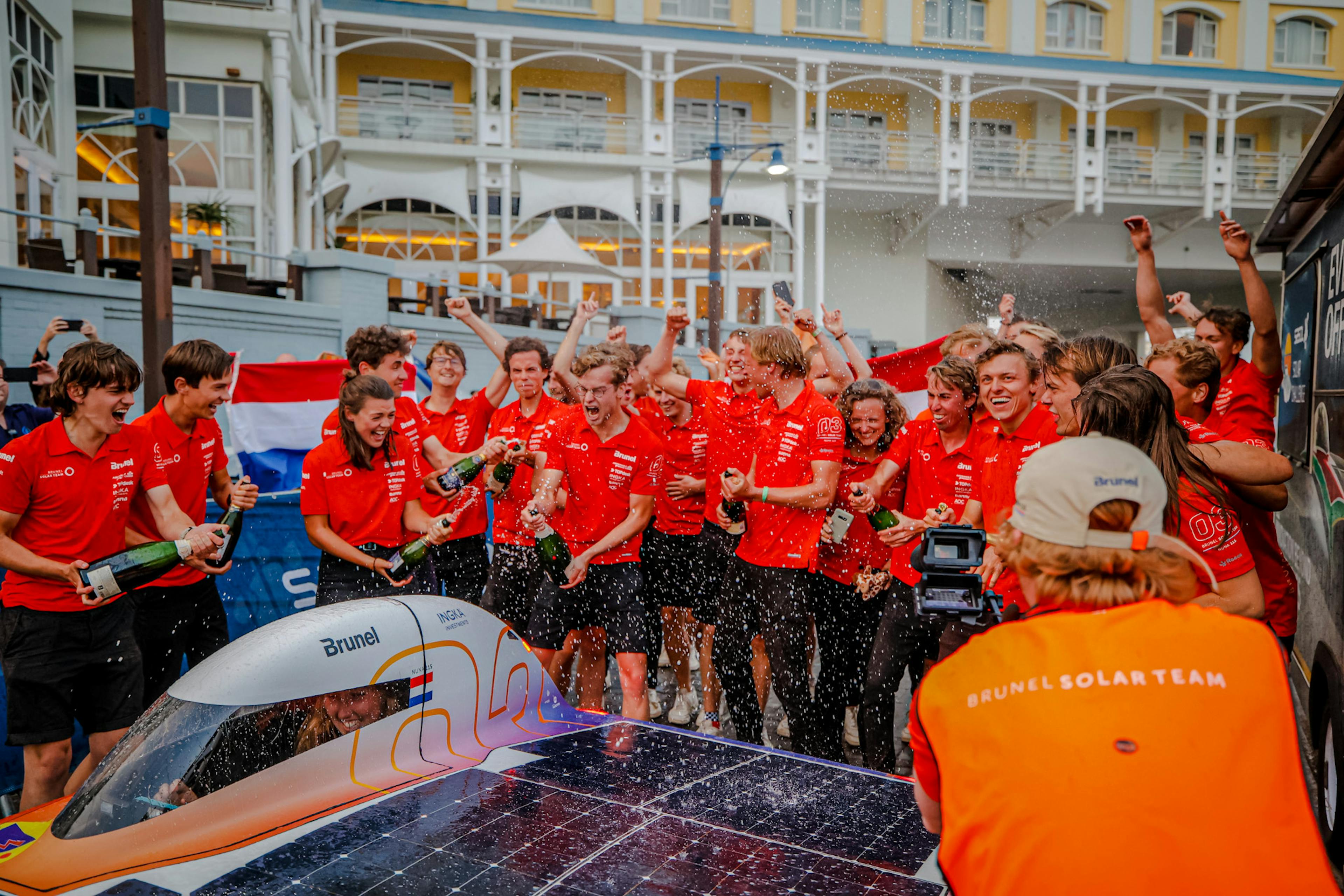
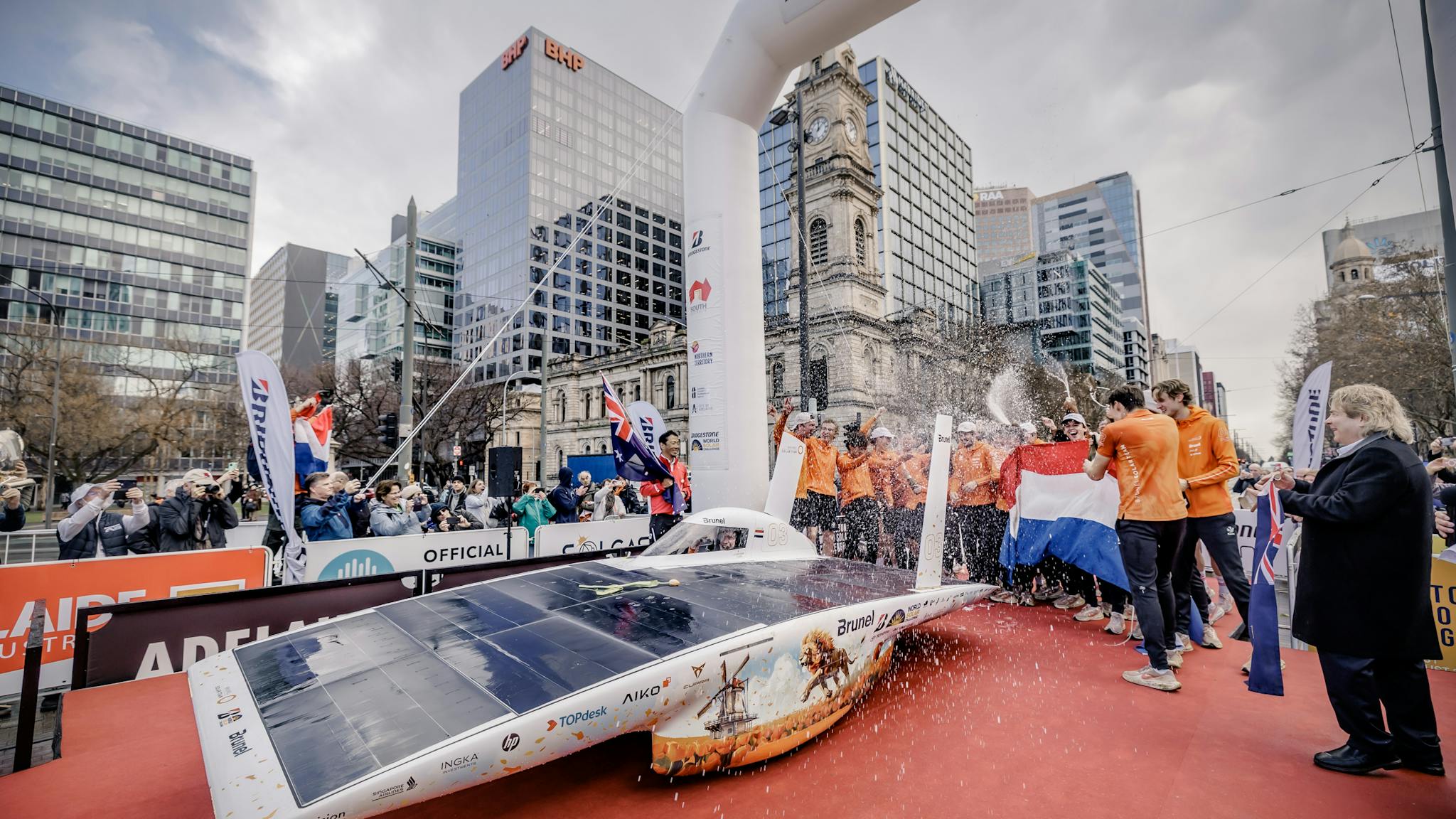
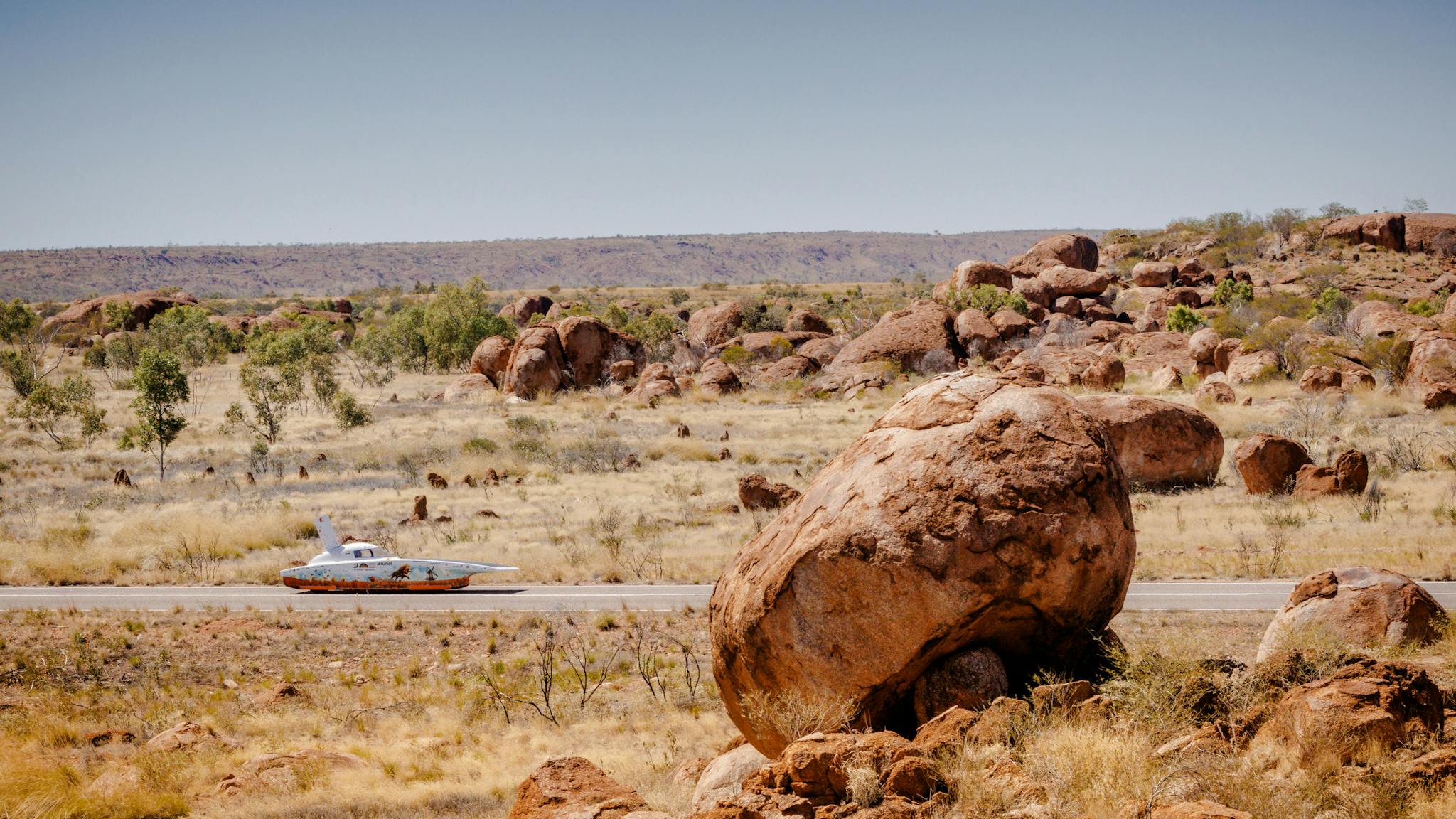
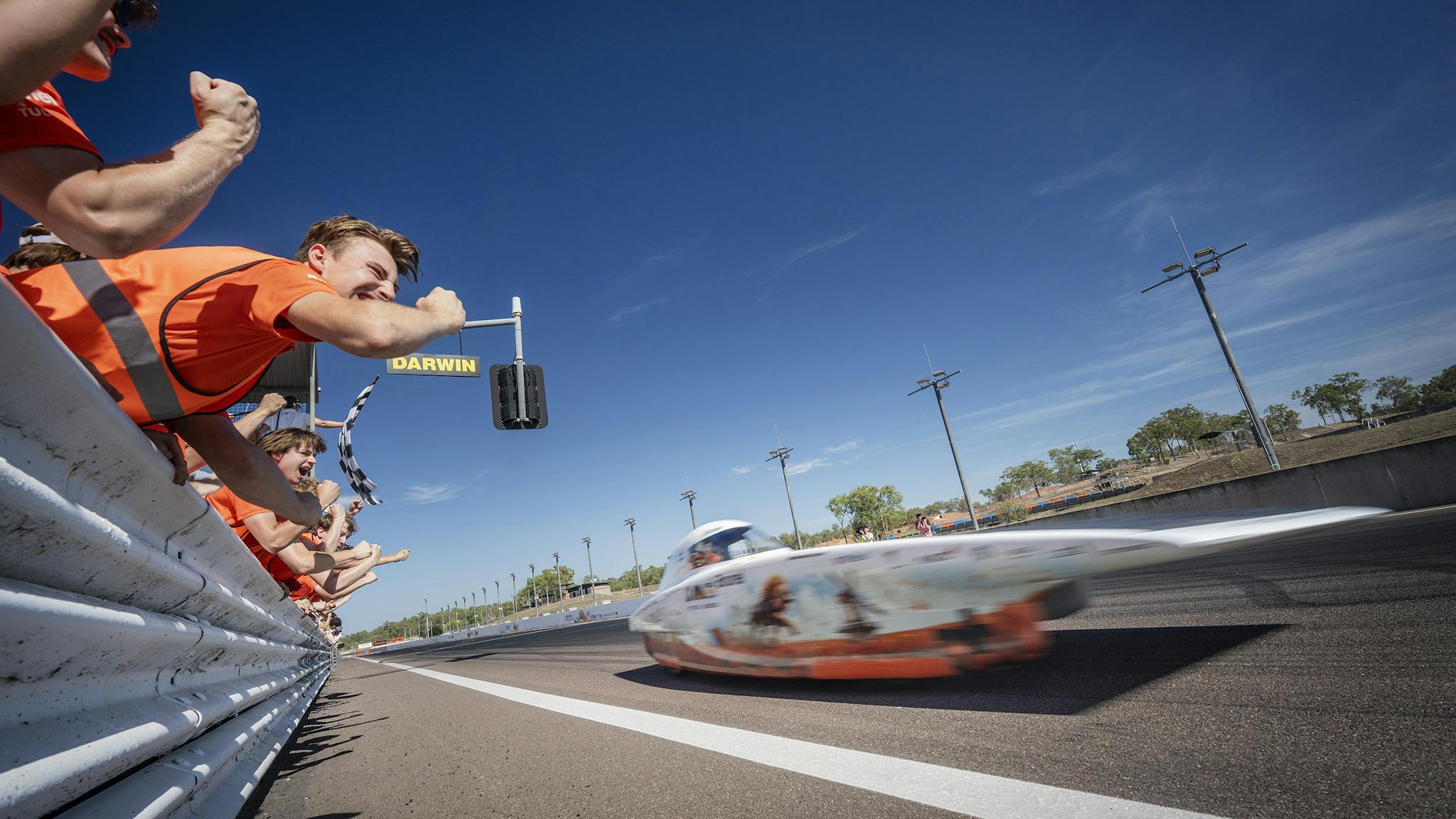
After five intense days racing 3000km from Darwin to Adelaide through the Australian outback, Nuna 13 was the first car to cross the finish line, earning the team its eighth world championship and adding an eighth golden tulip

Statistics
Bridgestone World Solar Challenge 2025
4132 km
86,6 km/h
+130 km/h
4.6m x 1.8m x 1.03m
178 kg
6 m2 Silicium
3kWh Li-Ion
Impressions




Nuna 12s